
International Day of Peace - Strengthening awareness and action for peace, disarmament and solidarity
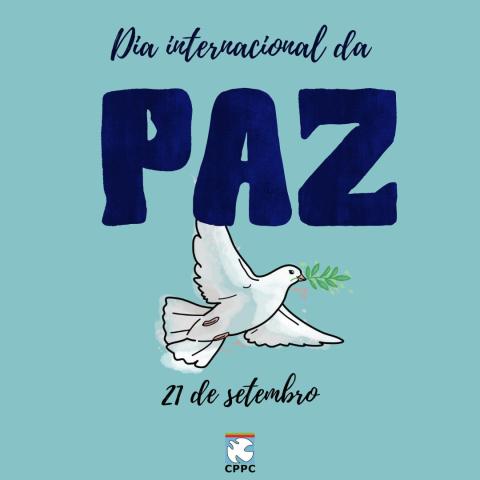
September 21st marks the International Peace Day, designated by the United Nations to affirm and promote peace and prevent tensions and causes of conflict in the world. In our time, celebrating this day and reflecting on its meaning is of the utmost importance, given the extremely serious situation in the world, with the proliferation of conflicts, the insane arms race, and the dangerous militaristic rhetoric prevailing, particularly in NATO and the European Union.
For the Portuguese Council for Peace and Cooperation (CPPC), peace is only possible with just international relations that safeguard sovereign equality among States and respect for the rights of peoples.
As the Portuguese Constitution stipulates, safeguarding peace implies the abolition of imperialism, colonialism, and all other forms of aggression, domination, and exploitation in relations between peoples, general, simultaneous, and controlled disarmament, and the dissolution of political-military blocs. Building a world of peace requires a serious commitment to political and diplomatic conflict resolution, non-interference in the internal affairs of states, and cooperation aimed at solving the most serious problems facing humanity—inequality, hunger, disease, poverty, underdevelopment, and environmental problems.
These principles, although enshrined in the United Nations Charter and the Final Act of the Helsinki Conference—as well as in the Constitution of the Portuguese Republic, which embraces and develops them—are not a reality in an increasingly unstable and dangerous world.
Faced with growing threats to its global hegemony, the United States of America—with the support of its allies, notably the G7, NATO, the EU, and countries like Israel—is resorting to war and militarism to seek to sustain its relative decline, particularly visible economically. In Eastern Europe, a war that began in 2014 continues. It could have been avoided and should have ended long ago, were it not for the constant sabotage of negotiations and the constant commitment to prolonging and worsening the conflict, with even more dramatic consequences for the people.
The CPPC reaffirms the need to adopt measures that put an end to the policy of confrontation, promote dialogue, and enable the finding of solutions aimed at a negotiated resolution of the conflict and ensuring collective security in Europe and the world.
In the Middle East, Israel is increasingly assuming itself as a factor of violence and destabilization in the region: evidenced by the genocide of the Palestinian people and the attempt to colonize all of Palestine, the attacks and occupation of territories in Lebanon and Syria, and the attacks on Iran, Yemen, and Qatar – only possible with the constant military, economic, and diplomatic support of the United States and the major powers of NATO and the EU. In the Far East, militarization is worsening: with the deployment of US naval fleets, the increase in US military alliances with Australia, Japan, South Korea, and other countries, and the constant provocations surrounding the Taiwan issue, increasing tension in the region.
In Latin America and the Caribbean, the recent deployment of US military vessels targeting Venezuela, the tightening of the blockade against Cuba, and threats against Brazil are new and serious elements of the US policy of domination of the region it considers its backyard, in line with the infamous Monroe Doctrine.
While the threats are numerous and serious, the assertion of sovereignty by countries and peoples is also growing, along with the demand for a peaceful resolution of conflicts, and popular movements against the increase in military spending, which diverts billions that should be used to ensure improvements in the living conditions of workers and peoples. In Portugal, the CPPC reaffirms its commitment to expanding the movement and action for peace and solidarity, as proclaimed in the Appeal unanimously approved at the 4th Meeting for Peace, held in Seixal on May 31st, which brought together over 100 organizations and 1,000 participants.
The Palestine solidarity campaign "All for Palestine! End the genocide! End the occupation!", which already brings together over 60 organizations and continues to grow, is an immediate priority; the solidarity campaign with Cuba, calling for an end to the blockade and for its removal from the arbitrary US list of countries deemed "promoters of terrorism," has expanded; the general action for peace and disarmament seeks to break the media blockade that has weighed on it.
This is our commitment; this is the path that serves the people, and we will not compromise.
And in this action for peace, which is for our shared future, all of us are not enough.
The National Board of the CPPC
September 21, 2025
--/
Dia Internacional da Paz - Reforçar o esclarecimento e a ação pela paz, o desarmamento e a solidariedade
Assinala-se, a 21 de setembro, o Dia Internacional da Paz, consagrado pelas Nações Unidas para afirmar e promover a paz e evitar as tensões e causas de conflito no mundo. No tempo em que vivemos, celebrar este dia e refletir sobre o seu significado, é da maior importância, dada a gravíssima situação que se vive no mundo, com a proliferação de conflitos, a insana corrida aos armamentos e a perigosa retórica militarista que se verifica, nomeadamente na NATO e na União Europa.
Para o Conselho Português para a Paz e Cooperação (CPPC), a paz só é possível com relações internacionais justas, que salvaguardem a igualdade soberana entre os Estados e o respeito pelos direitos dos povos.
Como a Constituição portuguesa preconiza, a salvaguarda da paz implica a abolição do imperialismo, do colonialismo e de quaisquer outras formas de agressão, domínio e exploração nas relações entre os povos, o desarmamento geral, simultâneo e controlado, a dissolução dos blocos político-militares.
A construção de um mundo de paz requer uma aposta séria na resolução política e diplomática dos conflitos, a não ingerência nos assuntos internos dos Estados e a cooperação visando a solução dos mais graves problemas que a Humanidade enfrenta – as desigualdades, a fome, a doença, a pobreza, o subdesenvolvimento, os problemas ambientais.
Estes princípios, embora se encontrem consagrados na Carta das Nações Unidas e na Ata Final da Conferência de Helsínquia – bem como na Constituição da República Portuguesa, que os acolhe e desenvolve –, não são realidade num mundo cada vez mais instável e perigoso.
Confrontados com ameaças crescentes à sua hegemonia global, os Estados Unidos da América – com o apoio dos seus aliados, nomeadamente do G7, da NATO, da UE e de países como Israel – recorrem à guerra e ao militarismo para procurarem suster o seu declínio relativo, particularmente visível a nível económico.
No Leste da Europa prossegue uma guerra iniciada em 2014, que poderia ter sido evitada e que devia ter terminado há muito, não fosse a constante sabotagem da via negocial e a aposta permanente no prolongamento e agravamento do conflito, com consequências ainda mais dramáticas para os povos.
O CPPC reafirma a necessidade da adoção de medidas que ponham fim à política de confrontação, que promovam o diálogo e possibilitem o encontrar de soluções com vista à resolução negociada do conflito e a assegurar a segurança coletiva na Europa e no Mundo.
No Médio Oriente, Israel assume-se cada vez mais como um fator de violência e desestabilização na região: comprovam-no o genocídio do povo palestiniano e a pretensão de colonização de toda a Palestina, os ataques e a ocupação de territórios do Líbano e da Síria, ou dos ataques ao Irão, ao Iémen e ao Catar – só possíveis pelo apoio militar, económico e diplomático constante por parte dos EUA e das principais potências da NATO e da UE.
No Extremo Oriente, agrava-se a militarização: com o envio de frotas navais norte-americanas, o incremento de alianças militares dos EUA com a Austrália, o Japão, a Coreia do Sul e outros países e as constantes provocações em torno da questão de Taiwan – aumentando a tensão na região.
Na América Latina e Caraíbas, o recente envio de navios militares norte-americanos visando a Venezuela, o agravamento do bloqueio contra Cuba e as ameaças ao Brasil são novos e graves elementos da política de domínio dos EUA da região que considera como seu pátio traseiro, em consonância com a famigerada Doutrina Monroe.
Se as ameaças são muitas, e graves, é também crescente a afirmação soberana de países e povos, a reivindicação da solução pacífica dos conflitos, as movimentações populares contra o aumento das despesas militares, que desviam milhares de milhões que deviam ser utilizados para assegurar a melhoria das condições de vida dos trabalhadores e dos povos.
Em Portugal, o CPPC reafirma o seu compromisso de procurar alargar o movimento e a acção pela paz e a solidariedade como proclama o Apelo aprovado por unanimidade no IV Encontro pela Paz, realizado no Seixal, em 31 de Maio, que contou com mais de 100 organizações e 1000 participantes.
A campanha de solidariedade com a Palestina “Todos pela Palestina! Fim ao genocídio! Fim à ocupação!”, que junta já mais de 60 organizações e que continua em crescimento, é uma prioridade no imediato; a campanha de solidariedade com Cuba, pelo fim do bloqueio e pela retirada de Cuba da arbitrária lista dos EUA de países ditos “promotores do terrorismo”, tem vindo a alargar-se; a ação geral pela paz e o desarmamento procura romper o bloqueio mediático que sobre ela recai.
Este é o nosso compromisso, este é o caminho que serve os povos do qual não abdicamos. E nesta ação pela paz, que é pelo nosso futuro partilhado, todos não somos demais.
A Direção Nacional do CPPC
21-09-2025